EN
EN  AR
AR 
10 Must-Try Famous Arabic Sweets in Qatar: Ultimate Guide for Sweet Lovers
Love desserts and wondering what makes Qatar so special for sweet lovers?
Qatar is often known for its modern architecture and luxury shopping, but holds a special place for sweet lovers due to its deep-rooted love of traditional Arabic sweets, which are served at every occasion, whether they be family gatherings or celebratory events. Sweets are an important aspect of daily life, not only food; they represent shared experience and time spent with others.
In this guide, we’ll explore the famous Arabic sweets in Qatar, what they’re made of, how they taste, and why locals love them so much. Whether you live in Doha or you’re visiting for the first time, this guide will help you enjoy the best Arabic desserts like a local.
Why Arabic Sweets Are Famous in Qatar
In Qatar, Arabic Sweets form part of the food culture of the country and are not only used as desserts, but also represent hospitality, celebrations, and customs associated with a country.
The influence of Gulf and Levantine cuisine on the Qataris’ food heritage has resulted in many types of Arabic sweets, including the use of Dates, Nuts, and Aromatic Spices. Therefore, many families serve Arabic sweets with Arabic Coffee as a means of greeting their visitors.
You’ll especially notice the importance of sweets during Ramadan and Eid. After Iftar, tables are filled with desserts, and families exchange sweet boxes as gifts. This strong cultural connection is why Arabic sweets qatar are loved by locals and tourists alike.
10 Famous Arabic Sweets You Must Try in Qatar
The table represents the most loved sweets you’ll find across Qatar. Each one has its own story, flavor, and place in local culture.
| Sweet Name | What Is It? | Key Ingredients | Taste & Texture | Why It’s Popular in Qatar | Best Time to Eat |
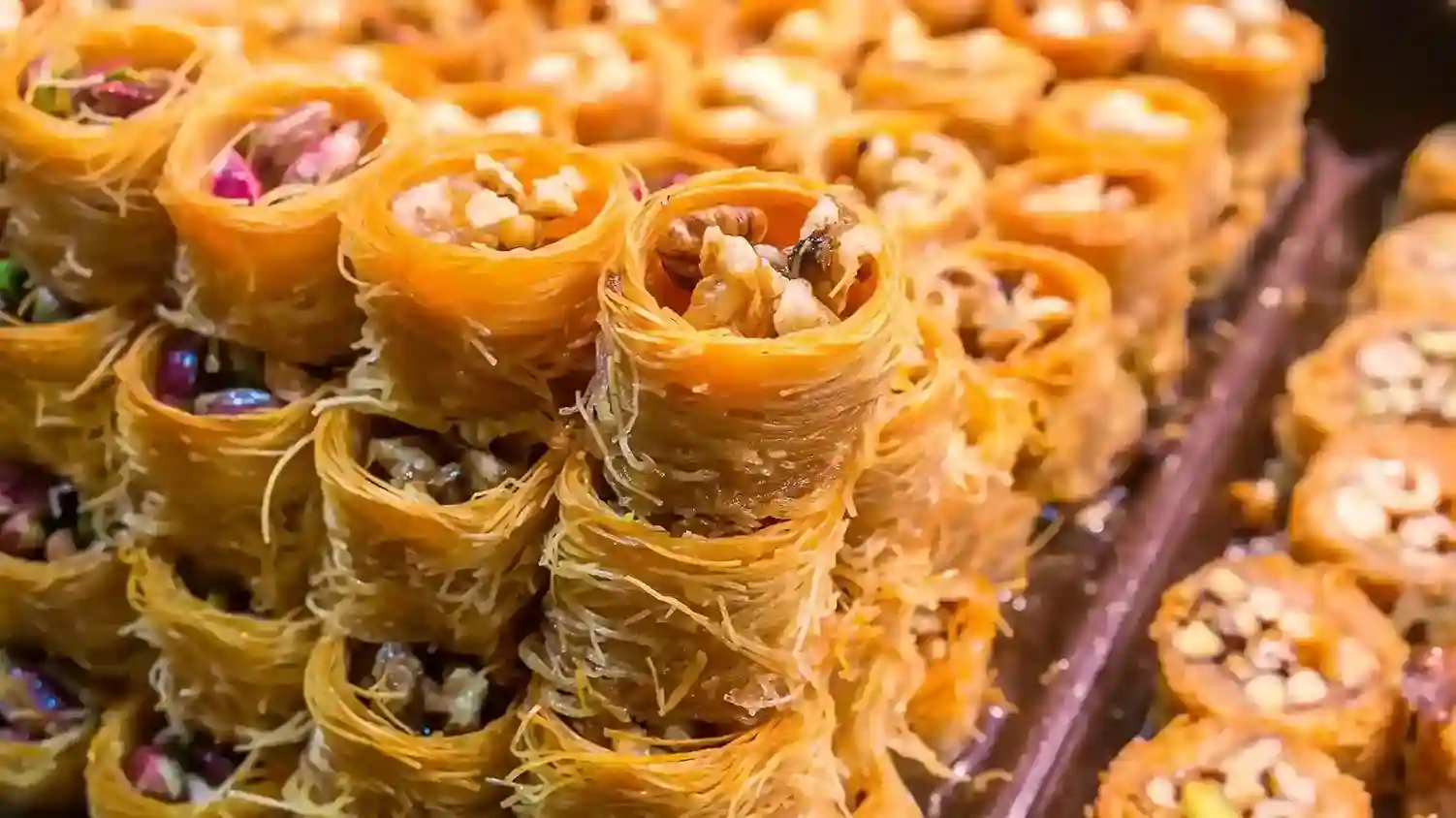
| Kunafa | A famous Middle Eastern dessert made with shredded pastry and cheese | Semolina or kataifi dough, soft cheese, sugar syrup, butter | Sweet and creamy inside with a crispy top | Very popular during Ramadan evenings in Doha | After dinner or after Iftar |
| Baklava | A layered pastry filled with nuts and soaked in syrup | Phyllo dough, pistachios or walnuts, honey or sugar syrup | Rich, very sweet, and crunchy | A classic choice in sweet shops and family gatherings | With Arabic tea or coffee |
| Maamoul | Small stuffed cookies enjoyed across the Arab world | Semolina or flour, dates or nuts, butter | Soft, crumbly, and lightly sweet | Common during Eid and special occasions | Festive days or as a snack |
| Luqaimat | Deep-fried dough balls, also called Arabic dumplings | Flour, yeast, date syrup or honey | Crispy outside and soft inside | A must-have Ramadan dessert | Fresh and hot after Iftar |
| Basbousa | A baked semolina cake soaked in sugar syrup | Semolina, yogurt, sugar syrup | Moist, soft, and mildly sweet | Easy to find in bakeries across Doha | Dessert or evening snack |
| Qatayef | Stuffed pancakes that are folded and fried or baked | Pancake batter, cheese or nuts, sugar syrup | Soft with creamy or crunchy filling | Mostly eaten during Ramadan | After Iftar |
| Halwa | A dense, jelly-like dessert popular in the Gulf | Sugar, flour or starch, rosewater | Sweet, sticky, and rich | commonly offered to guests as a warm gesture of welcome. | With Arabic coffee |
| Date Rolls (Tamriya) | A simple dessert made mainly from dates | Dates, flour, butter | Naturally sweet and soft | Dates are a daily staple in Qatari homes | Anytime, especially during Ramadan |
| Umm Ali | A warm dessert similar to bread pudding | Milk, nuts, pastry | Creamy, comforting, and lightly sweet | Loved for its home-style, warm taste | After dinner |
| Asabe Zainab | Fried dough shaped like fingers and soaked in syrup | Flour, butter, sugar, syrup | Crunchy and sweet | Served during family gatherings and celebrations | As a dessert or snack |
Are Arabic Sweets Healthy?
Yes, when eaten in moderation, Arabic sweets can be beneficial for your health with the right choices of desserts. The majority of Arabic traditional desserts utilize natural products like dates and nuts for energy and nutritional value. Both of these ingredients, dates, being a great source of fibre and minerals, while nuts consist of healthy fats that create satiety and fullness.
Many Arabic desserts also have milk and cheese added to them, increasing the calcium and protein content of your diet. Each of these desserts contains high amounts of sugar and calories; it would be prudent to indulge in small servings of these desserts to keep their benefits in perspective. Overall, enjoying these desserts mindfully can make a well-rounded diet and provide an opportunity for pleasure as opposed to becoming a daily habit of indulgence.
When Do People Eat Arabic Sweets in Qatar?
People enjoy sweets at many times, but especially:
- After Iftar during Ramadan
- During Eid celebrations
- At weddings and family events
- When welcoming guests at home
This habit makes famous Arabic sweets in Qatar part of everyday life.
Where People Commonly Buy Arabic Sweets in Qatar
You can find sweets almost everywhere, including:
- Traditional sweet shops
- Local bakeries
- Arabic restaurants
- Online food delivery apps
If you’re searching for arabic sweets doha or best arabic sweets in qatar, Doha has no shortage of options.
Conclusion
Whether you’re exploring Arabic desserts in Qatar or searching for the best Arabic sweets in Doha, one thing is clear: Qatar’s sweet culture is rich, welcoming, and deeply rooted in tradition. From creamy Kunafa to crunchy Baklava, these desserts are more than just food; they’re part of everyday life, celebrations, and warm hospitality. If you truly love desserts, tasting the famous Arabic sweets in Qatar is an experience you shouldn’t miss.
If you’re searching for authentic flavors produced with high-quality ingredients and prepared with loving care, then Laziz Marza is the company you should look to for authentic arabic sweets. Thousands of customers have tasted the home-made quality of these products, and Laziz Marza offers a fun and exciting way to enjoy authentic arabic desserts.
FAQs
What is the most famous Arabic sweet in Qatar?
Kunafa is one of the most popular choices. You will find Kunafa in most sweet shops and many sell Kunafa during their holiday seasons as well.
Are Arabic sweets very sweet?
Some are rich, but many are balanced with nuts and cheese. They taste delicious without being overly sweet.
Can tourists enjoy Arabic sweets in Qatar?
Yes, and so many tourists who do end up loving the Arabic desserts. Arabic Desserts are easy to find, and many people recommend trying them when visiting Qatar!
Is Kunafa more popular than Baklava in Qatar?
They are both very popular, and each is enjoyed by its own group of people. However, during Ramadan, the favoured dessert is the Kunafa.
Are Arabic sweets healthy?
When consumed in moderation, they will fit into a healthy diet plan. The primary ingredients are natural (dates and/or nuts); therefore, they provide additional healthy benefits.
When do people usually eat Arabic sweets in Qatar?
Typically, Arabic desserts are enjoyed during the evening; however, they may also be eaten after a meal or when a guest arrives.
Do Arabic sweets contain eggs?
Many Arabic desserts have egg as an ingredient; however, that isn’t true for a lot of Arabic desserts.
Are there vegetarian Arabic sweets?
A lot of Arabic desserts are made up of a lot of vegetables, such as fruits, nuts, milk, and semolina; therefore, all Arabic dessert recipes have vegetables as a primary ingredient.
What Arabic sweets are best during Ramadan?
Certain Arabic dessert recipes are most popular to eat around the time of Ramadan, such as Luqaimat, Qataye, and Kunafa, which are typically eaten after the meal of Iftar.